
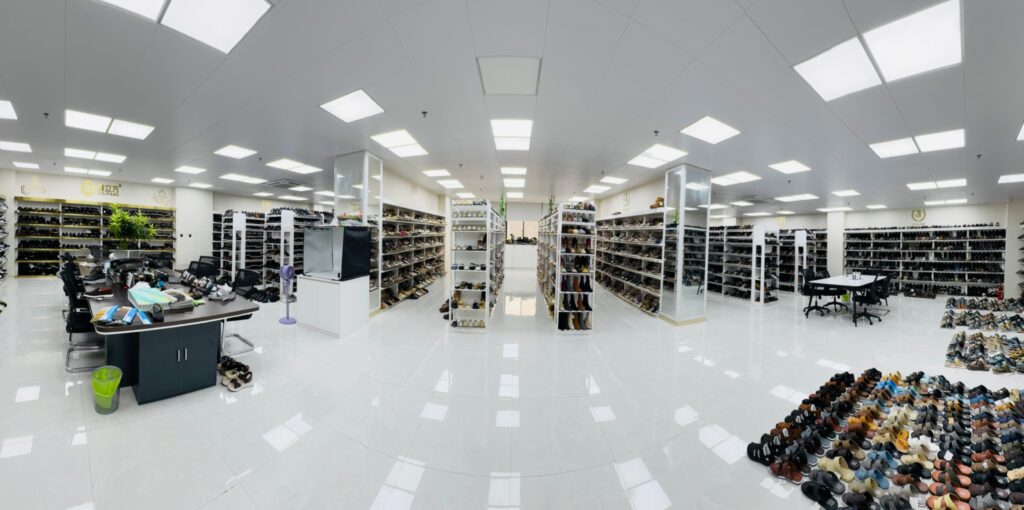
International buyers who want to source shoes in Guangzhou usually begin in Liwan District, where several concentrated footwear markets make it practical to compare styles, materials and workmanship in person. From there, most buyers shortlist suppliers, arrange a showroom or factory discussion, then request samples and quotations before committing to production. This guide explains where to go, what to prepare, and how to move from market browsing to a clear next step with a supplier.
Why Guangzhou Is an Important Footwear Sourcing Hub
Guangzhou, in Guangdong, China, remains a practical base for footwear sourcing because trading and manufacturing activity sit close together. Buyers can review many physical samples in one trip, meet suppliers face to face, and discuss customization without relying only on catalog photos. For international brands, importers and wholesalers, that combination of markets, showrooms and nearby production capacity is often more useful than remote communication alone.
Guangzhou is also convenient when you need to compare options quickly: casual and fashion footwear, sandals, sneakers, boots and children’s styles often appear in the same sourcing route. The goal of a first trip is rarely to place the largest order on day one. It is to understand what is available, which suppliers communicate clearly, and which styles fit your market.
Many first-time buyers arrive with only a vague idea of “find shoes in China.” A clearer brief — category, customer, destination market and approximate quantity — turns market visits into productive meetings. Guangzhou’s value is not that every supplier is identical; it is that you can compare several options in person within a few days and decide who deserves sampling time.
If you already source from other Chinese cities, Guangzhou still helps as a style and sample hub: you can validate trends, collect references and then continue development with a shortlisted partner. Buyers who prefer meeting people before negotiating production details often find this sequence more reliable than closing a deal from photos alone.
What Types of Shoes Can You Find in Guangzhou?
Depending on the season and the suppliers you meet, buyers commonly review:
- Women’s casual shoes, fashion shoes and heels
- Men’s casual shoes, dress shoes and sneakers
- Sandals and slippers
- Boots and seasonal styles
- Children’s footwear
Availability depends on the supplier’s current collection and development capacity. Rather than assuming every category is always in stock, bring clear references so suppliers can show the closest matches or discuss development.
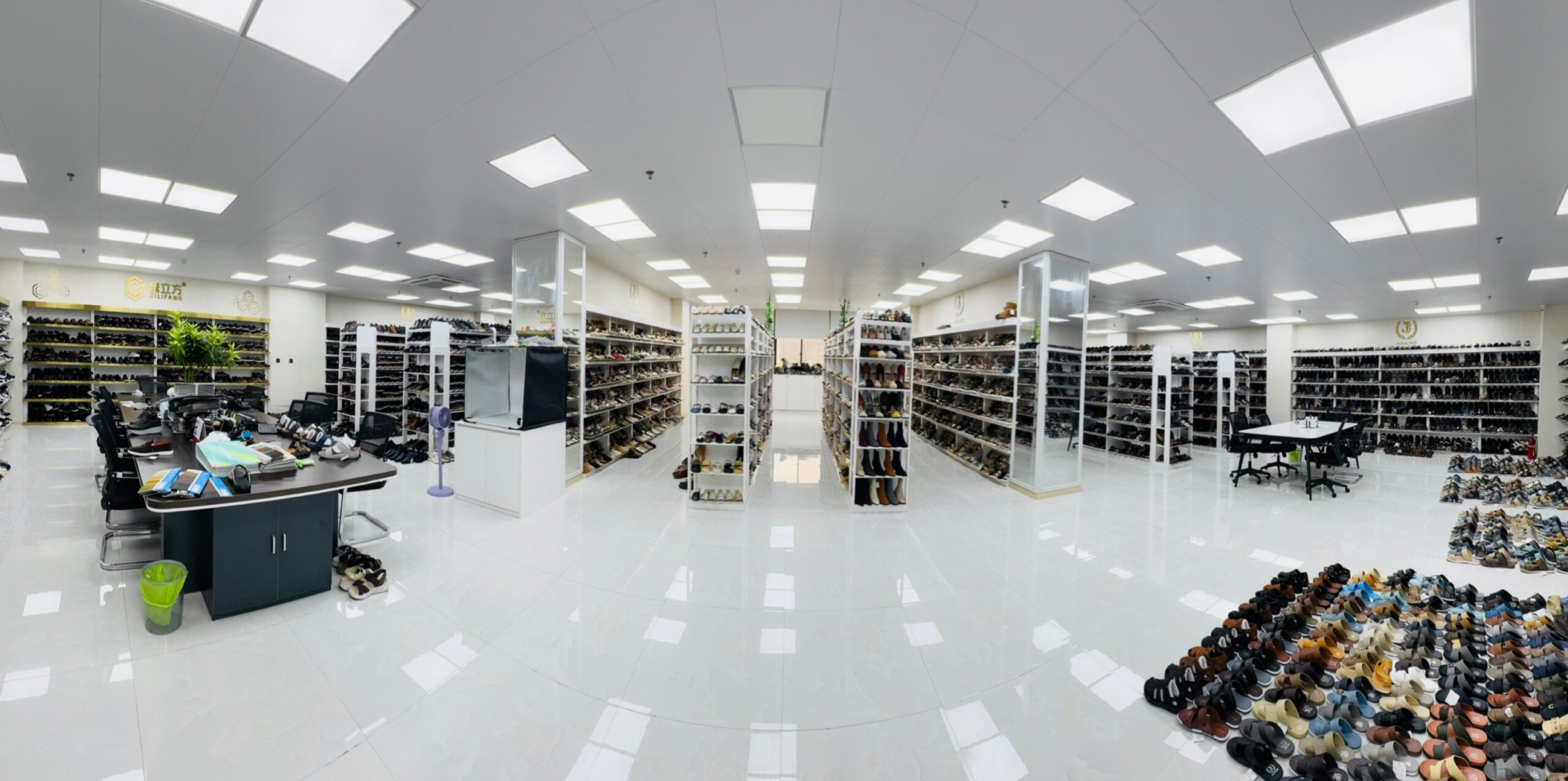
Where to Source Shoes in Guangzhou
If you are visiting Guangzhou for the first time, don’t plan your day around visiting every shoe market. Start with one concentrated area, identify the styles that actually fit your market, and then spend the rest of your time on supplier follow-up.
Guangzhou’s main footwear cluster sits especially around Liwan District. Around Buyun Tiandi alone there are roughly 2,000+ footwear businesses — booths and small companies packed into the same walking area, each with its own style focus. Hualigong, Xicheng, Tianhe and Oumei sit close by. Catalogs and WeChat albums go stale quickly here; if you want the newest samples, walk the floors in person.
Hualigong · Xicheng (华丽宫 / 西城)89-91 Huanshi West Rd, Liwan · neighboring stops · Open in Google Maps
Tianhe Shoe City (天和)20-22 Zhanxi Road, Liwan · Open in Google Maps
Oumei / Oulu (欧美·欧陆鞋城)24 Zhanxi Road (Hongji Building), Liwan · Open in Google Maps
Map pins use street addresses around Zhanxi Road / Huanshi West Road in Liwan. On mobile, swipe cards then tap to open Google Maps navigation.
| Sourcing area | How to use it |
|---|---|
| Buyun Tiandi (步云天地) | About 2,000+ shoe businesses in/around this area. Floors 4–10: finished shoes; below 4: materials. Newest styles — visit in person. |
| Hualigong · Xicheng · Tianhe (华丽宫 / 西城 / 天和) |
Treat as one nearby cluster. Continue sample comparison and supplier talks in the same area — product range is broadly similar, so focus on workmanship, communication and fit for your market rather than “which building has unique styles.” |
| Oumei Shoes City (欧美鞋城) | Add if you still need more options after the core cluster, without planning a separate day trip. |
Buyun Tiandi (步云天地)
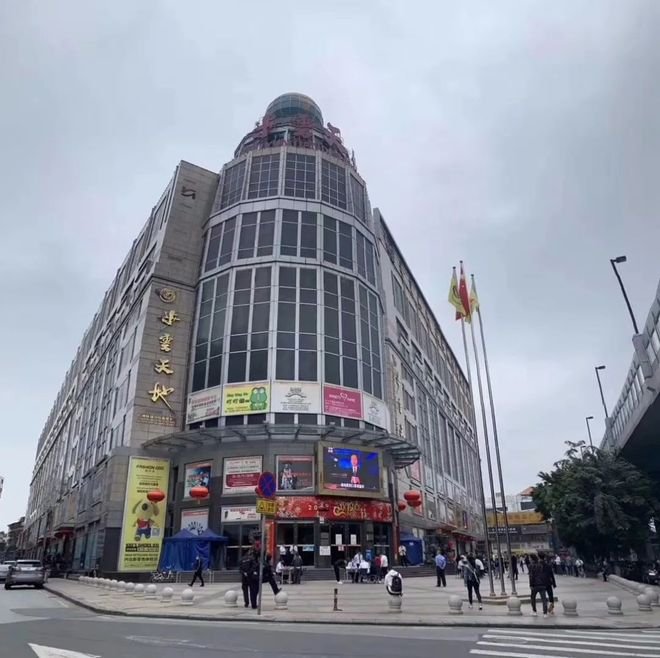
Buyun Tiandi is a common starting point inside the Liwan footwear cluster. The building and nearby streets hold a huge supplier density — on the order of 2,000+ shoe businesses in and around this area. No two booths carry the same mix: one may push sandals, another dress shoes, another kids or sport-inspired styles. That is why buyers who only scroll photos often miss what is actually new on the floor this month. Floor layout matters: floors below 4 are mainly shoe materials wholesale (鞋材); floors 4–10 are finished footwear wholesale booths (鞋类批发档口). Go upstairs for finished shoes — do not spend your first hours on materials floors if your goal is styles and ready samples. Walk floors 4–10, photograph what you like, and collect contacts; then continue to the nearby markets below on foot or with a short ride.
Hualigong, Xicheng and Tianhe (华丽宫 / 西城 / 天和)
Hualigong, Xicheng and Tianhe sit near each other and serve a similar purpose for international buyers: more sample floors, more supplier conversations, and another chance to compare construction and materials. You do not need a separate “advantage story” for each venue — footwear categories and sourcing formats overlap heavily. Walk them as one block, keep the same checklist, and shortlist people who communicate clearly and match your brief.
How International Buyers Can Source Shoes in Guangzhou
Finding the markets is easy. The harder part is using the day well once you are inside — what to photograph, what to ask, and when to stop walking and start following up.
1. Define Your Product Before Visiting
Before you travel, prepare a simple brief:
- Shoe category and target customer
- Target price range (internal guidance for your team)
- Preferred materials and construction notes
- Expected quantity range
- Target market and size needs
- Packaging and branding requirements
The clearer your requirements are, the easier it is for suppliers to recommend suitable products. Even rough references — competitor photos, material swatches or last season’s bestsellers — help suppliers respond faster.
2. Visit the Markets and Review Samples
Pick one cluster for the first pass — usually Buyun Tiandi plus the nearby Hualigong / Xicheng block. Photograph samples, write down booth numbers and contacts, and mark which styles need changes for your market. Physical samples beat photos for materials and workmanship; still, do not treat a nice display as the whole decision.
A common mistake for first-time buyers is judging a supplier only from the samples displayed in a market. The more important question is what happens after you select a style: who handles development, where is production completed, and who will be responsible for quality when the order moves into production?
A few details that save time on the ground: mornings are quieter for photos and conversations; after lunch the aisles fill up fast. When a booth gives you a card, save the WeChat / Chinese name on the spot — many teams reply faster there than on email once you are back at the hotel. Taxi and DiDi drivers usually recognise 步云天地 or 华丽宫 more reliably than “shoe market near the station.”
3. Shortlist Suppliers
Avoid placing a bulk order after a single introduction. Build a shortlist and compare. Two or three serious candidates are usually more useful than ten unread catalogs. Compare shortlisted suppliers against the same checklist so you can make a clearer decision later.
Also separate “interesting style” from “ready partner.” A booth may have the right look but weak communication, unclear production ownership or no path to packaging and branding support. Those gaps show up after you leave Guangzhou — when you need a revised sample, a material change, or a straight answer on shipment timing by WhatsApp or email, and the person who smiled at the booth is suddenly hard to reach.
Build a shortlist and compare:
| Item | What to Check |
|---|---|
| Product | Does the supplier have suitable styles? |
| Quality | Is workmanship consistent across samples? |
| Communication | Can they understand your requirements? |
| Customization | Can they support development or private label needs? |
| Quantity | Can they handle your expected order range? |
| Sampling | Can they make samples or modify existing styles? |
| Production | Where is production actually completed? |
| Packaging | Can they follow your packaging requirements? |
Should You Visit a Showroom or Factory?
A showroom visit and factory visit serve different purposes. Many buyers use both at different stages.
Showroom Visit
A showroom visit suits first product selection, comparing styles efficiently, and early discussions for new brands or buyers who are still refining direction. It is often the fastest way to see many samples and decide whether a supplier is worth deeper follow-up.
Factory Visit
A factory visit suits production verification, quality discussion, capacity planning, customization details, packaging checks and longer-term cooperation. Not every supplier you meet in a market operates their own factory floor — ask where production is completed and which processes are in-house versus partnered.
If a supplier cannot clearly explain production location, sampling ownership and who approves quality before shipment, keep them on a conditional shortlist until those points are documented. A friendly meeting is easy to get in Guangzhou; a clear answer on who actually makes the shoes is harder — and that is the part that matters when something goes wrong later.
Some buyers visit a showroom first, request samples, then schedule a factory visit only after the sample direction is confirmed. Going to a factory too early often turns into a long tour with no clear style decision; going after you already shortlisted 2–3 models usually gets clearer answers on lasting, materials and who signs off QC.
What Should You Ask a Shoe Supplier?
Use a consistent question list so you can compare answers later.
Product
- What materials are available for this style?
- Can this style be customized?
- Can you develop a new sample from my references?
Production
- Where is the production completed?
- What parts of production are handled in-house?
- Which processes are handled by partner factories?
Order
- What is the MOQ for this style?
- What is the sample lead time?
- What is the production lead time after sample approval?
MOQ and lead times vary by product and supplier, so treat answers as supplier-specific rather than city-wide rules. Ask how MOQ changes if you need multiple colors, special packaging or a new last. Clarify whether sampling fees are credited against bulk and what happens if the sample needs a second round.
If you also need help comparing OEM, ODM and private-label models for footwear sourcing in China, review that process before you negotiate development details. Knowing which model you want — catalog private label, modified ODM or full OEM — prevents mismatched expectations during the Guangzhou visit.
Write down answers in the meeting. After several market stops, details blur quickly. A shared note for materials, MOQ ranges, sample timing and packaging options makes supplier comparison much easier when you return to your hotel or office.
What Should New Footwear Brands Know?
You do not have to be a large established brand to start sourcing in Guangzhou. New footwear brands, private labels and small product launches regularly use market visits and showroom reviews to test direction before production.
A practical path for new brands is:
- Select styles that fit your customer and price band
- Request samples
- Test the market with a controlled launch
- Refine materials, fit or packaging
- Discuss production once the product is clearer
Be cautious with promises such as “no MOQ,” “free samples for everyone,” or guaranteed outcomes. Ask for the real sampling process, expected quantities and what happens after you approve a sample.
New brands should also decide what “success” looks like for the first production round: one hero style, a small capsule, or a broader assortment. Guangzhou can support all three, but the sampling plan and supplier shortlist change with that decision. Start with the minimum assortment that can test your market, then expand once fit, quality and sell-through are clearer.
If you are building a private label, prepare logo files and packaging preferences early. If you need deeper development, bring construction notes or physical reference pairs. Either path works; mixing both without a brief usually slows the supplier down.
How to Prepare for a Guangzhou Shoe Sourcing Trip
Bring references you can show on your phone. Buyers who arrive with only “I want shoes” usually spend the first half-day explaining themselves; buyers who can point to 5–10 target styles move faster from booth to booth.
Before the trip
- Product references and category focus
- Target market and estimated quantity range
- Material and packaging requirements
- Logo files and branding notes, if ready
- Size requirements for your destination market
During the visit
- Photograph samples and record supplier contacts
- Compare construction and materials side by side
- Note customization needs
- Request quotations where appropriate
- Arrange follow-up meetings while you are still in Guangzhou
- Don’t schedule a factory tour on the same half-day as your first long market walk — you will be tired and the sample notes get messy
After the visit
- Compare shortlisted suppliers
- Review samples against your brief
- Confirm specifications
- Request a final quotation
- Arrange a production sample when ready
Can You Visit Shoe Suppliers in Guangzhou Without Buying Immediately?
Yes, buyers can arrange visits to discuss products, review samples and understand supplier capabilities before making an order. An appointment is recommended, especially if you want to review many samples or discuss customization. Bring product references, explain your target market and expected quantity range, and use the meeting to decide whether the supplier is a fit.
A visit without an immediate purchase is normal in Guangzhou footwear sourcing, provided you communicate professionally and respect the supplier’s time. The purpose of the first meeting is fit assessment: product match, communication quality and whether sampling is worth starting. Buyers who arrive prepared usually get better attention than buyers who only say they want “any shoes.”
If you are traveling with a tight schedule, request appointments before you fly. Market walkthroughs can be flexible; showroom and factory slots are easier when both sides know the product focus in advance.
Visiting JIJIA Shoes in Guangzhou
From Buyun Tiandi and Hualigong, the JIJIA showroom / office is only about 10 minutes away — close enough that many buyers stop by after market walking to rest, regroup and review styles in a quieter space. JIJIA Shoes can arrange an appointment at its Guangzhou showroom / sample room (样板间) and sales office (办事处) — so you can compare samples, brief your requirements and decide whether to move into sampling, without treating the first meeting as a factory tour. A rest room is available for short breaks during your visit, but please book ahead: daily reception capacity is limited, and walk-ins make scheduling hard to manage.
The sample room has more than 10,000 footwear styles for buyers to review. At the office meeting you can discuss target market, estimated quantity, packaging, branding and custom footwear development. If production details need to be verified later, a separate factory discussion can be arranged after the showroom shortlist is clearer.
To arrange a showroom visit, share your product type, target market and estimated quantity in advance so the team can prepare relevant styles. You can also use the visit showroom page for appointment details, or learn more about JIJIA Shoes and browse our footwear styles before you travel.
How to Get to the JIJIA Showroom & Office
Address: File 6A02, Building G, No.33 XiCha Road (西槎路), Baiyun District, Guangzhou, Guangdong, China.
This is the appointment location for the sample room and sales office — separate from the Zhanxi Road market floors, but close: from Buyun Tiandi / Hualigong it is typically about 10 minutes by taxi or DiDi. Many buyers treat it as a short follow-up stop to rest and shortlist styles after market browsing. Please appoint in advance — reception slots are limited.
WhatsApp for live guidanceSend your hotel / market location after booking — we can advise the simplest route.
Map pin matches the confirmed office coordinates: 23°09′07.4″N 113°14′09.8″E (near the Hualigong / Shijing River side of the Zhanxi–Tongde cluster). Save the Google pin before you travel. Show drivers: 同德鞋业基地G座 (more precise than only “西槎路33号”).
- Best for most buyers — taxi / DiDi: From Buyun Tiandi / Hualigong (Zhanxi Road markets), take a taxi or DiDi to 同德鞋业基地G座 — usually about 10 minutes depending on traffic. From Guangzhou Railway Station the ride is also short. Show the Chinese address to the driver and leave a little buffer before your appointment.
- Metro + short ride: Use Guangzhou Metro toward Baiyun District (for example via transfers to stations near Baiyun Park / Tongde area), then take a short taxi or DiDi to Building G, No.33 XiCha Road. Exact transfers change with line schedules — Google Maps or Amap is more reliable than memorizing one fixed route.
- From Baiyun Airport: Take Metro Line 3 and transfer into the city, then taxi/DiDi to the XiCha Road address; or go door-to-door by taxi/DiDi if you have luggage and a fixed appointment time.
- On arrival: Enter Building G and go to File 6A02. Please arrive on time for your showroom appointment and bring product references on your phone.
Always book the visit first. We keep a rest room available so buyers can pause after market walking, but the number of guests we can host well each day is limited — advance booking avoids overcrowding and keeps meetings orderly. Unannounced walk-ins are harder to support. Details are also on the visit showroom page.
Who Can Contact JIJIA Shoes?
Footwear brands, retailers, importers, wholesalers, sourcing companies and new footwear brands are welcome to request a showroom or office appointment. The useful filter is not company size alone — it is whether you have a real sourcing plan and enough detail to start a productive sample discussion.
A Simple Guangzhou Footwear Sourcing Route
- Start with concentrated footwear markets in Liwan District.
- Review samples and identify suitable styles.
- Record supplier information.
- Shortlist suppliers based on product fit and communication.
- Arrange showroom or factory visits.
- Request samples and quotations.
- Confirm product specifications before production.
This is a practical working order, not an official city itinerary. Adjust the route based on appointments, category focus and how many days you have in Guangzhou.
Final Checklist for International Shoe Buyers
- Define your footwear category
- Prepare reference styles
- Visit concentrated footwear markets
- Compare physical samples
- Shortlist suppliers
- Ask about customization
- Confirm production arrangements
- Request samples
- Compare quotations
- Arrange follow-up meetings
Planning to Source Shoes in Guangzhou?
Visit JIJIA Shoes to review footwear samples and discuss your sourcing requirements.
Looking for specific footwear styles? Send us your product references, target market and estimated quantity.
After you map the Guangzhou route, use the footwear importer China sourcing process for brief → sample → bulk, and the shoe sample development guide before you approve PPS. OEM scope lives on OEM/ODM.