
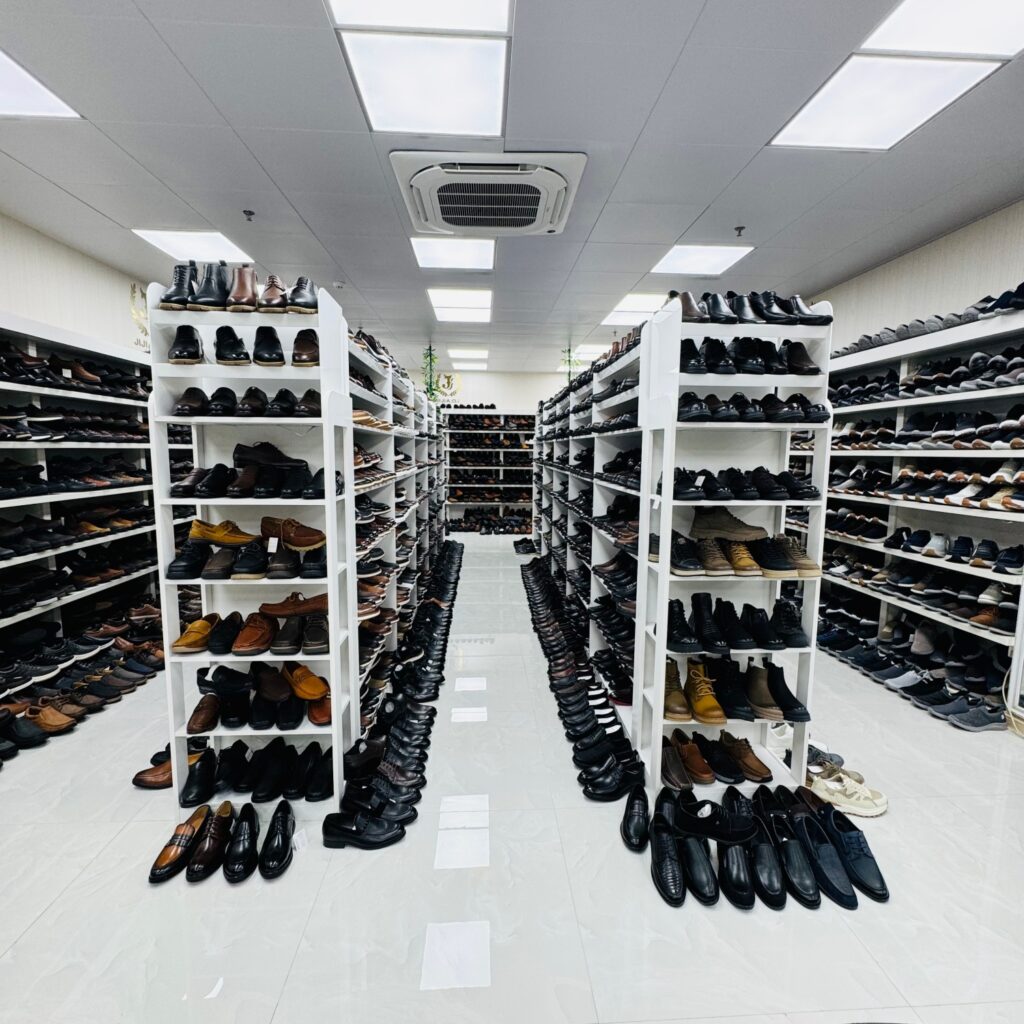
What Is Shoe Sample Development and Why Does It Matter?
Shoe sample development is the bridge between design intent and mass production. It is the stage where a tech pack becomes a physical prototype, materials are validated, fit is confirmed, and construction quality is assessed. For B2B footwear buyers sourcing from China, the sample process is also the single best opportunity to evaluate a factory’s true capabilities before committing to a production order. Sample costs from Chinese manufacturers typically range from USD 200 to USD 500 per pair, with a standard turnaround of approximately 7 days. Once the buyer meets the minimum order quantity (MOQ), sample fees are almost always refunded or credited against the production order. Understanding what to check, what to expect, and which red flags to watch for can save importers from costly production mistakes down the line.
Sample Costs and What They Include
The USD 200-500 per pair sample fee covers more than the materials and labour to produce one pair of shoes. It includes pattern-making or pattern modification, last adjustment (if a custom last is needed), material sourcing for small quantities, prototype construction by a senior sample maker (not a production line worker), and a basic design consultation. The fee structure varies by complexity:
| Sample Type | Typical Cost | Timeline | What It Covers |
|---|---|---|---|
| Initial / Design Sample | USD 200-350 | 7-10 days | First prototype from tech pack, material sourcing, fit confirmation |
| Pre-Production Sample (PPS) | USD 150-300 | 5-7 days | Final sample using bulk-production materials and construction |
| Complex / Custom Last | USD 350-500 | 10-14 days | Custom last development, new sole mould, complex construction |
| Rush Sample (3-day) | USD 300-600 | 3-5 days | Priority production, express shipping within China |
Most established manufacturers, including JIJIA.GZ, waive or refund the sample fee once the production order meets the agreed MOQ. This means the sample cost is effectively a deposit against the production order, not a sunk cost. However, buyers who cancel after sampling or do not proceed to production will forfeit the sample fee.
The Sample Development Process Step by Step
A well-structured sample development process follows five clear stages. Each stage produces a deliverable that the buyer should review and approve before the next stage begins:
- Tech Pack Review (Day 0): The manufacturer’s development team reviews the tech pack for completeness: drawings, material specifications, colour references, size run, construction method, sole type, hardware, labelling, and packaging. Missing or ambiguous specifications are flagged. This stage often includes a design consultation call or video review.
- Material Sourcing and Last Preparation (Days 1-3): The factory sources the specified materials in small quantities from its supply chain. If the design requires a custom last, the last maker produces or modifies the last during this window. For standard lasts from the factory’s existing library, this step is faster.
- Prototype Construction (Days 4-6): A senior sample maker hand-builds the prototype, cutting materials individually rather than using the automated cutting machines used in mass production. This ensures maximum attention to detail and allows for in-process adjustments.
- Internal Quality Check (Day 6-7): The factory’s quality control team inspects the sample against the tech pack, checking fit, construction integrity, material matching, and visual quality. Defects are corrected or the sample is remade before it is sent to the buyer.
- Buyer Review and Feedback (Days 7-14): The sample is shipped to the buyer (or reviewed via high-resolution photos and video for distant clients). The buyer evaluates fit, aesthetics, material quality, and construction. Feedback is returned to the factory, and if revisions are needed, a second-round sample is produced (typically 5-7 additional days).
Once the buyer approves the sample, it becomes the golden sample—the reference standard for mass production. The Pre-Production Sample (PPS) is then produced using bulk-production materials on the production line to confirm that the approved design can be replicated at scale.
The PPS (Pre-Production Sample) Approval Process
The Pre-Production Sample is the most critical checkpoint in the entire footwear sourcing process. Unlike the initial design sample, which may be made by a senior craftsman on a sample bench, the PPS is produced on the actual production line using the same materials, machinery, and workers that will run the mass production order. This ensures that what the buyer approves is what the factory can consistently reproduce.
The PPS approval process works as follows: (1) the factory produces 2-3 pairs on the production line using bulk materials; (2) the buyer (or their third-party QC agent) inspects the PPS against the approved golden sample; (3) if the PPS matches the golden sample in materials, construction, and quality, the buyer signs the PPS approval form, authorising mass production to begin; (4) if discrepancies are found, the factory must correct the issue and resubmit a new PPS before production starts.
Never authorise mass production without PPS approval. Factories that pressure buyers to skip the PPS step are signalling either capacity issues or a lack of confidence in their own production consistency.
What to Check on a Shoe Sample: The Inspector’s Checklist
A thorough sample evaluation covers six critical dimensions. Each dimension has specific checkpoints that reveal the factory’s attention to detail and production capability:
- Sole Bonding: Check the adhesion between the upper and the sole. Pull firmly at the toe, heel, and both sides. Any separation or visible glue line wider than 1mm is a failure. The ISO 17708 standard for whole-shoe upper-sole adhesion is the reference benchmark.
- Pair Matching: Place the left and right shoes sole-to-sole and side-by-side. Check for symmetry in height, shape, sole alignment, and upper contour. Mismatched pairs indicate poor last matching or inconsistent closing.
- Size Accuracy: Measure the internal length against the stated size using a measuring stick or last. Compare against the ISO 9407 size chart. A deviation of more than 3mm in length is a production risk that will cause fit complaints at retail.
- Material Consistency: Compare the actual materials against the tech pack specifications. Check leather grain direction, colour matching across panels, texture uniformity, and thickness. If the factory substituted a material without notification, this is a red flag for production integrity.
- Stitch Density: Count stitches per inch (SPI) on all visible seams. The tech pack should specify the required SPI; typically 8-12 SPI for leather uppers, 6-8 for heavy stitching. Inconsistent SPI or skipped stitches indicates inconsistent sewing line quality.
- Overall Finish: Check for excess glue, visible threads, uneven trimming, collar padding consistency, and lining smoothness. A factory that delivers a clean sample is more likely to maintain finish quality in bulk; a sloppy sample almost always predicts sloppy production.
Red Flags: Warning Signs That Signal Production Problems
The sample development process reveals more than product quality—it reveals the factory’s operational discipline and reliability. The following red flags should be taken seriously, as they predict problems that will multiply during mass production:
- Sample made on a different line than production: If the initial sample is hand-built by a master craftsman on a sample bench but the production order will run on an automated line with different workers, the sample does not represent production quality. Always require a PPS from the actual production line.
- Unauthorised material substitution: If the factory substitutes a material to save cost or because the specified material is unavailable, and does not notify the buyer, this signals a lack of transparency that will recur during production. A professional factory documents every substitution and seeks buyer approval.
- Rushed timeline without explanation: A factory that promises a 3-day sample when the standard is 7 days may be cutting corners in material sourcing, pattern precision, or quality control. Rush samples are appropriate for urgent situations but should carry a premium fee and explicit quality caveats.
- Reluctance to produce a PPS: If the factory resists producing a pre-production sample or pressures the buyer to proceed directly from the design sample to bulk production, this is a serious warning sign. It suggests the factory is not confident in its ability to replicate the sample at scale.
- Inconsistent communication: If the factory’s development team is slow to respond, provides incomplete answers, or changes the point of contact frequently during sampling, expect the same or worse during production. Responsive, consistent communication during sampling is a reliable predictor of production-phase service quality.
- No tech pack feedback: A factory that accepts a tech pack without any questions or suggestions may not have reviewed it carefully. A competent development team will flag ambiguities, suggest material alternatives, and raise construction concerns during the initial review.
Tech Pack Requirements: What Your Manufacturer Needs
A complete tech pack is the foundation of accurate sample development. The more detailed the tech pack, the fewer iterations are needed, and the faster the sample reaches approval. At minimum, a footwear tech pack should include:
- Multiple-view technical drawings (side, top, bottom, front, back) with measurements
- Bill of materials (BOM) listing every component with supplier or specification reference
- Colour specifications with Pantone or physical swatch references
- Size run and grading rules (European, UK, US, or custom)
- Last specification (existing library last or custom last dimensions)
- Sole specifications including material, colour, and construction method (cemented, vulcanised, injection-moulded, Goodyear welted)
- Stitching diagram with SPI specification, thread type, and stitch pattern
- Labelling and packaging requirements (hangtag, barcoded box, care label, size label)
- Compliance testing requirements (REACH, CPSIA, SABER, EAC as applicable)
A tech pack that omits any of these elements invites the factory to make assumptions, which leads to re-sampling and delays. JIJIA.GZ provides a tech pack template to buyers who need assistance structuring their specifications, ensuring that the first sample is as close to final as possible.